Thursday, July 28, 2011

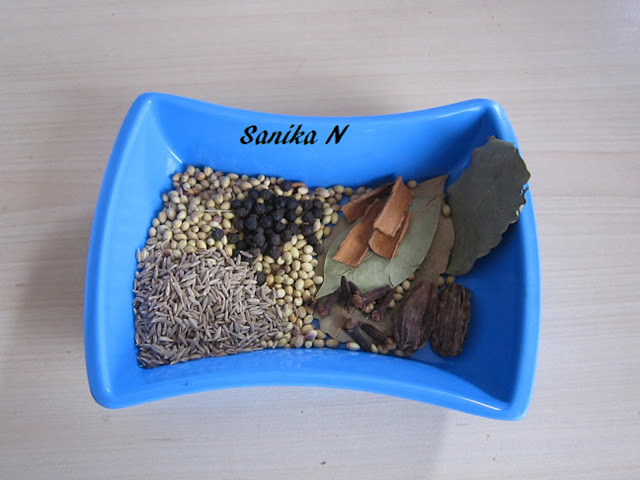
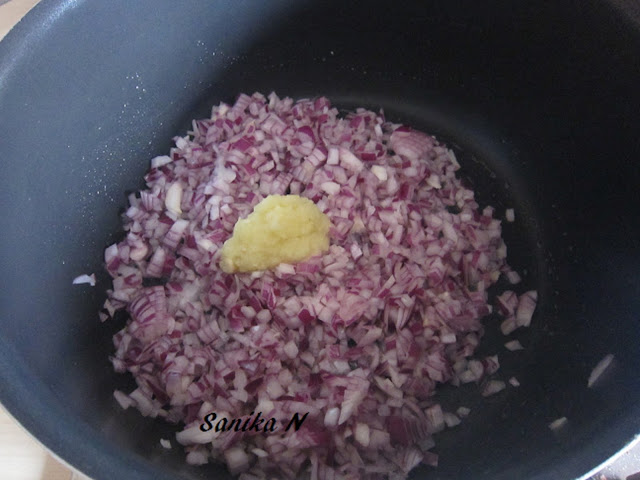
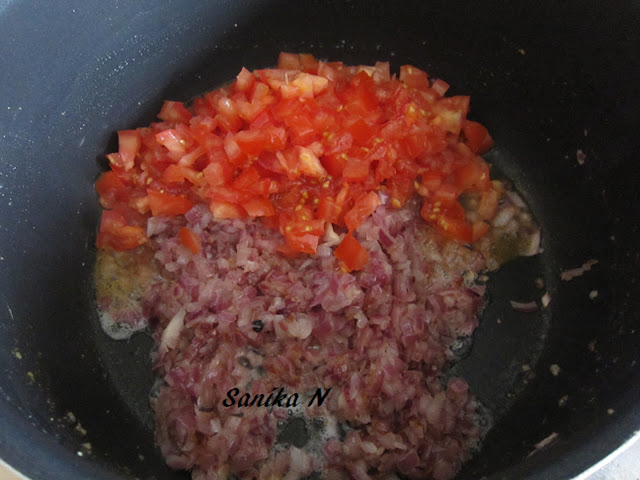
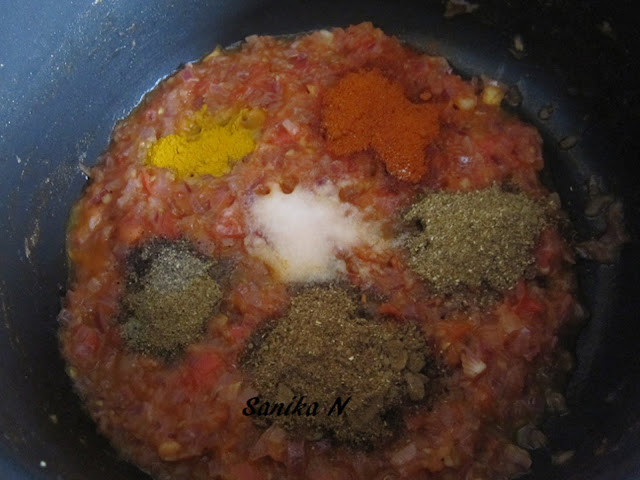
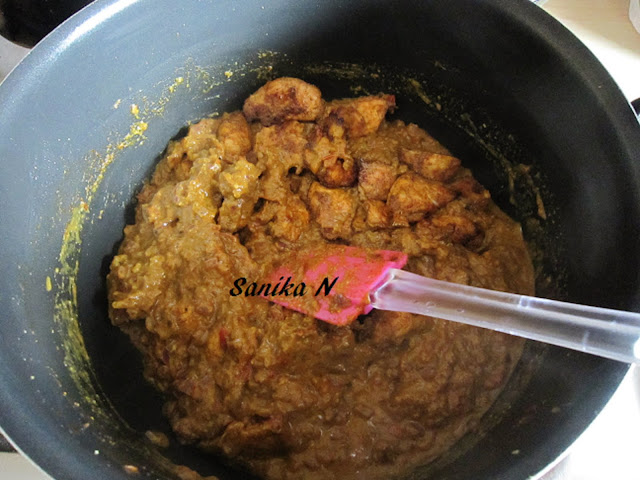
Chicken Tikka Masala - चिकन टिक्का मसाला


.
.
.
.
.
.
.
.
.


दिवाळीच्या फराळाच्या रेसिपी मराठीत


पुरुषाच्या छातीवरून तुम्ही त्याचे भाग्य ओळखू शकता 

मराठी विनोद  

आचार्य अत्रे यांचे निवडक विनोद  

आपका फेवरीट रंग आपका व्यक्तित्व बताता है 

क्या आप मांगलिक है? 

नवा फोन कशाला, ह्या युक्ती वापरा आणि पैसे वाचवा 

माथे की लकीरों से तय होती है मौत की तारीख, जानिए कैसे

मारुतीची स्तोत्रे आणि शक्ती 
 
मादक अभिनेत्री अमृता खानविलकर हिचे आणखी फोटो 


40 Most Powerful Military Nations of 2016

मृत्यु से 6 महीने पहले ये 7 काम नहीं कर पाते हैं लोग

नरेंद्र मोदी यांच्या सहीचे विश्लेषण  

तुमची सही बोलते तुमचा स्वभाव 

आयुर्वेद के ये 10 चमत्कार आपको कभी बीमार नहीं पड़ने देंगे

देवपूजेचे महत्त्व


प्रत्येक माणासाला जीवनात सुख समाधान आणि शांती प्राप्त व्हावी म्हणूनदेवपूजा(Devpuja) हे एक उत्तम साधन आहे.
हल्लीच्या संघर्षमय काळात आणि आपल्या दैनंदिन कार्यक्रमात देवपूजेसाठी आपणाला जास्त वेळही मिळत नाही. तरीही वेळात वेळ काढून देवपूजा करावी.
यथाशक्ती, यथामती आणि मिळतील त्या उपचारांनी देवपूजा मनोभावे केली तर मनाला शांती मिळते, घरातील वातावरण पवित्र होते, प्रसन्नता प्राप्त होते, आणि आपापली कामे करायला उत्साह मिळतो.
देवपूजा करणाऱ्यांना एक प्रकारचे विशेष सामर्थ्य येत असते, वाणीला तेज चढते, अंगीकृत कार्याला यश येते आणि इतरांचाही उत्साह वाढतो आनंद होतो.
देवपूजेमुळे शारीरिक, मानसिक आणि आचरणातील दोष दूर होतात. आत्मिक बळ वाढते. आत्मा हाच खरा परमात्मा आहे. तो संतुष्ट असला तरच जीवनाचे सार्थक होते.
आपल्य कुटुंबास देवघरातील देवांची पूजा एकजणच करतो. बाकीचेलोक स्नानानंतर देवाला फुले, अक्षता वाहून देवाला नमस्कार करतात.
पूजेनंतर जप करावा. पोथी वाचावी. गीतेचा अध्याय, गुरुचरित्र, गजानन विजय यासारख्या आपल्या आराध्य देवतेची कथा, पोथी यांचे वाचा करावे.
अशा प्रकारे जप, पोथी-वाचन, देवदर्शन आणि व्रते, पूजा, स्तोत्रे, प्रार्थना वगैरे उपानसनेचे प्रकार आहेत. त्यांच्यामुळे मन प्रसन्न होऊनमनोरथ पूर्ण होतात.


Advantages of Gold Exchange Traded Funds (Gold ETFs)


Advantages of Gold Exchange Traded Funds (Gold ETFs)
Gold ETFs - Gold Exchange Traded Funds (ETFs) have become quite popular in the last couple of years with a number of Mutual Fund companies in India launching this Exchange Trades Funds. In fact Gold ETFs are the most popular asset ETFs in India currently. The asset size of these ETFs has increased sharply with the increasing popularity of gold as an investment option. Gold ETF are like stocks listed on the  stock exchanges any one can buy and sell these ETF just like shares.
Advantages of Investing in Gold ETF
1.     Purchases can be made in small denominations: An investor can purchase gold ETFs in small denominations. For example, one gold ETF unit represents one gram of gold, some funds its half gram (eg. Quantum Gold Fund). Therefore, an investor can even buy small amount of units at a time and then accumulate more units over time to shore up his investment.
2.     No worries about quality: When buying a gold bar or gold coin, a buyer has to make sure he buys it from a trustworthy source, lest he gets saddled with gold of lesser purity. There have been instances when one has paid for a 24K/10 gram gold coin and has got a lesser quality coins. This cannot happen in the case of a Gold ETF as an investor does not need to take physical delivery of the gold.
3.     Convenient resale: Since Gold ETFs are listed and traded on the exchange like other company shares, an investor can buy or sell units easily anytime during market hours. Try comparing this with the headache of selling a gold bar, coin or jewelery. An investor always tends to lose some amount towards making charges plus other deductions  in case of jewelery and banks do not buy back gold coins, even when purchased from them.
4.     Hassle-free storage: In case of Gold ETFs, there is no hassle of storage as it is in demat form. In case of gold bars, coins or jewelry, one may have to hire a bank locker, which again comes at a considerable cost.
5.     Taxation Advantage: Physical gold needs to be held for three years or more to be eligible for long-term capital gains. If physical gold is sold before the stipulated period of three years then short-term capital gains tax will be applicable (the gain will be added to his/her total income). Comparatively, if Gold ETFs are held for less than a year, then the gains fall under short term capital gains. This means, that gains are clubbed with the overall income of the investor and depending on the tax slab he/she falls in, taxes will be applicable. Further, if the Gold ETF units are held for over 12 months; then the gains are classified as long term capital gains tax, where the investor will pay either 10% on the gain (profit) without indexation or 20% with indexation, whichever is lower.
Some of the Gold ETFs presently available in India  
1. Benchmark Gold BEES
2. UTI-Gold ETF
3. Kotak Gold ETF
4. Reliance Gold ETFs
5. Quantum Gold Fund:
6. SBI Gold ETFs
7. Religare Gold ETF
8. HDFC Gold ETFs
9. ICICI Prudential Gold ETF

Wednesday, July 27, 2011

The big small car story


India is slowly carving out its place as a global small car hub. Already, companies like Suzuki Motor, Hyundai Motor and Nissan have shifted production of some of their global models to India and in future, more small cars would be manufactured from here.
The reason is simple: India offers what Renault-Nissan chief Carlos Ghosn famously described as 'frugal engineering'. Besides the cost advantage, global car makers are also discovering that the Indian market's appetite for small cars remains unsatiated despite exponential growth in the last six years.
According to global consultancy IHS Global Insight, more than 2.2 million 'A' segment cars would be produced in India by 2014, which is about 29% of the world's small car production. In other words, almost one in three small cars in the world would be produced in India by 2014.
"This would represent about 29% of the total world output of 7.7 million A-segment cars. We believe India would be exporting more than 5 lakh A-segment cars by 2014," says Deepesh Rathore, managing director for IHS Automotive in India.
Sample this: Suzuki Motor Co makes the A-Star car only in India and then sells some of it to compatriot NIssan. Nissan sells this car rebadged as Pixo in European markets. Hyundai Motor Co makes the i10 and 120 cars only in India and exports sizeable numbers of these to various markets. Nissan stopped production of the Micra in UK and now makes this car at its facility in Chennai.
India's status as a small car hub received a shot in the arm when in 2006 the government introduced a differential excise duty regime favouring small cars. As of now, cars less than 4 metre in length and with engine displacement of 1200 cc for petrol or 1500 cc for diesel are taxed at the lowest excise slab of 10%. All others attract more than double the excise rate.
As India became a small car base over the last five years, the overall cost equation has improved further and the Indian supplier base in now able to meet stringent global quality requirements.
But some hurdles remain. Rathore of IHS cautions that more exports would actually happen in the B segment (such as Hyundai i20) and the micro truck (such as Tata Ace) and that the lukewarm response to Tata Nano has brought down export potential of small cars from India.
"Small cars exports would have received a further boost had the Nano achieved the success that Tata Motors targeted for. Due to the lukewarm response to the Nano, ultra low cost car projects will now not receive the attention they deserve," Rathore added.
The debacle of the Nano appears to have discouraged many followers and some mini car projects are already being abandoned. General Motors India has recently admitted that plans to launch a car smaller than the Spark hatchback have been shelved.
"It (small car) was under discussion when the `1 lakh car (Nano) came in. We have reached a decision point that it is not right for us," said GM India president and managing director Karl Slym.
The development of an ultra low cost car by Bajaj Auto for Renault also appears to be in jeopardy, again partly due to inability to source parts at such low costs which would justify ultra low prices for the end product.
Pawan Goenka, the president of Society of Indian Automobile Manufacturers, says India is now losing its cost advantage, especially for exports, because of increasing labour cost, power and infrastructure. He also alludes to high cost of setting up new plants. Given these challenges, India may lose out to countries like China in the small car pecking order unless significant policy interventions are made.


Our kleptocracy runs on 'speed money'


Corruption has permeated every area imaginable, making life so difficult that we can only oscillate between anger and despair

We probably live in the worst possible times for India. Morally speaking. Never before has the ordinary man been as disgusted as now, with the way our system functions or 'dysfunctions'.
Corruption has permeated every area imaginable, making life so difficult that we can only oscillate between anger and despair. If you don't bribe you don't get your work done. As simple as that.
'Speed money', is how my young nephew describes it. The poor lad, who was innocent enough just two years ago, at 21, to not understand why the cop had opened a drawer and kept it open, just staring at my nephew who had gone to the local police station to verify his credentials to renew his passport. Dropping names only antagonised the cop further and the poor chap was made to revisit the police station three more times.
His mother, my sister, a teacher, upright and staunch in her beliefs and principles, did not bow under pressure when faced with a similar dilemma. My mother left in her will an attractive property in Malad to be shared by us sisters. One day, an innocuous postal slip reached our home, announcing that the tenants of our building were in the final stages of proclaiming our building to be a co-operative housing society.
I was made to use my 'contacts' and found myself sitting in the cabinet secretary's chamber at Mantralaya, explaining the situation. A very honest man himself and known to me for many years, the bureaucrat smiled apologetically, shook his head, and said, "Yes, these things happen in our country. Your tenants bribed officials and got their work done!"
Confiding that this particular department was one of the most corrupt, he advised me to go with the flow. But my sister would have none of it. She hired a good lawyer and got down to the task. Determined as she was, she made umpteen visits to the back of the beyond (Wadala) and won the case. But alas, petty bribes to the clerk, 'to move the files' had to be made. It's everywhere, this rotten system. And if you think it's just the big cities, think again. It's that much worse in small towns. Years ago, I was blatantly asked to pay up for getting an electricity connection changed to my name. More than two decades later, it still stands in the previous owner's name.
Nobody cares a damn for any wrong they commit, for they know they won't be caught. Even if they are, they won't be booked. And if they are, it will be years before justice will take place, anyway. Chalta hai ... So what do we do? Where to from here?
In my opinion, the solution is two-pronged. One, create fear for the law of the land. The courts must clear up the backlog (like Gujarat did), so fear is instilled in the wrongdoer and confidence in the one wronged. Two, inculcate a value-based education, so we develop a new breed of honest individuals with integrity.
Corruption may not impact the very rich or the very poor in the manner it affects the middle class, which is where, fortunately, a new dawn is shaping up. Thanks to Anna Hazare, 2011 will prove to be the watershed in public tolerance of corruption particularly in the political arena, the root cause of all forms of corruption.
We ought to support this new messiah and the Lokpal reforms he has in mind. Read about the Jan Lokpal Bill on Wikipedia and decide; do you want bribery, extortion, nepotism, patronage, embezzlement, drug trafficking, human trafficking, criminal enterprise to thrive? Or do you want a good, clean form of governance where you live in an atmosphere of peace and dignity with the least amount of daily harassment. Decide; You want kleptocracy or genuine democracy?

Parsis debate Karachi move on mixed marriage kids

Parsi family visiting a fire temple in the city. Picture for representational purpose


A recent decision by the Karachi's apex Parsi trust to give children of women married to non-Zoroastrians the right to adopt their mother's religion has generated interest in Mumbai where the community is still divided over the issue.

The Karachi Parsi Anjuman Trust Fund, the counterpart of the Bombay Parsi Punchayet (BPP), passed a resolution saying if one marital partner is a practising Zoroastrian, children of such marriages can be initiated into the religion. The trust has also permitted funeral rituals on their premises for all Zoroastrians, even those who opt for cremation and burial.
In Mumbai, the orthodox and reformist sections in the community have differences on the issues. A few years ago, the BPP banned two priests from the Towers of Silence and fire temples because they had been conducting Navjotes or religious initiation of children born to Parsi women married to non-Zoroastrians. The priests were also accused of breaking tradition by conducting the after-death ceremonies of Zoroastrians who opted for non-traditional funerals. The issue is being heard in court.
Anahita Desai of World Alliance of Parsi-Irani Zarthoshtis, a group representing orthodox views said, "While I cannot comment on the resolution, Parsis in India have traditional views on the issue. Even at the BPP polls, every candidate has to project orthodox views... This shows the community wants to go with the old rules."
Reformist groups like the Association for Revival of Zoroastrianism (ARZ) welcomed the Karachi resolution. "It is a right step in the direction to achieve the Zoroastrian motto of equality,' said Vispy Wadia of ARZ.
Byram Avari, chairman of the KPATF was not available for comment. But in a reply to a letter published in Mumbai-based community magazine Parsiana, he said while Karachi's Parsis were not consulted for their views, the resolution did not evoke any protests from community members or priests.
According to Sunnu Golwalla, a Karachi resident, the community generally had a liberal attitude to the issue of rights to women married to non-Zoroastrians.
"Personally, I am conservative and do not welcome the resolution. But, I think the average Parsi in Karachi is open-minded. They want Parsi women married outside the community to have the right to initiate their children to the religion," said Golwalla.
But Golwalla said she was doubtful priests in Karachi will agree to do Navjotes of children with a non-Zoroastrian father.

Harry Potter Cast Through The Years


sterra

https://www.effectivecpmnetwork.com/ch72yvye4s?key=4a0b887dafac489a2f6ab362663b40f9

Popular Posts

Total Pageviews

Categories